Culture
Bats and Agave: Why the Pollinators Matter
Bats pollinate agaves by feeding on nectar from the tall flower stalks and carrying pollen from plant to plant. Most agaves grown for mezcal are harvested before they flower, so letting some plants bloom is one way to keep the genetic variety that makes mezcal interesting.
How do bats pollinate agave?
Many agaves send up a tall flower stalk once, late in life. At night, nectar-feeding bats visit the flowers, and pollen sticks to their fur and carries on to the next plant. The U.S. Fish and Wildlife Service describes the lesser long-nosed bat as an important pollinator of Mexico's tequila-producing agave, and says agaves in Mexico rely on bats for pollination in a symbiotic partnership. The bats follow a seasonal "nectar trail" of blooming agaves and cacti, and can travel up to 40 miles a night to feed. You can read the Fish and Wildlife Service's account.
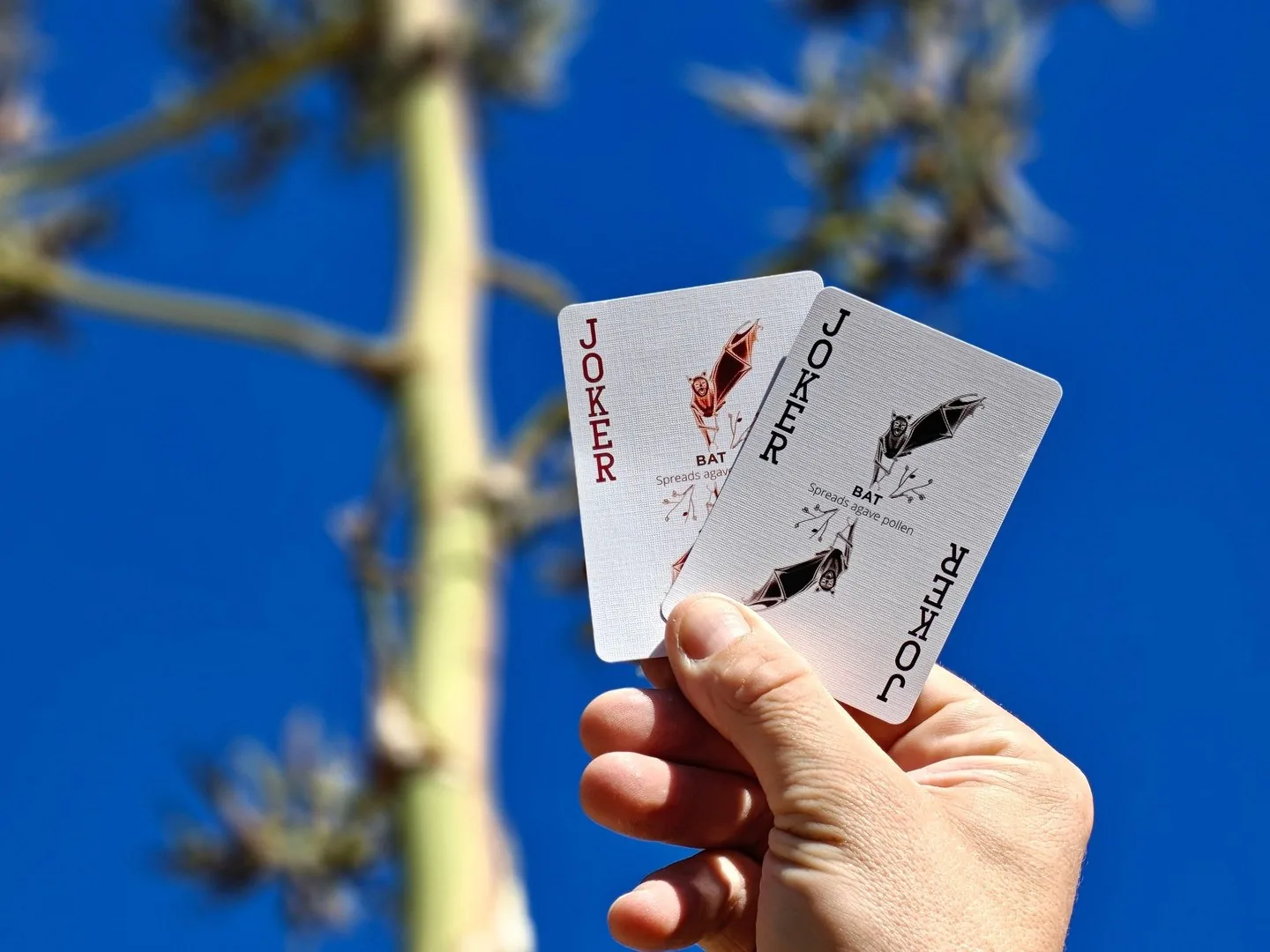
That is why our own card deck, the Discovery Deck, has two bat jokers. The deck introduces 40 agaves used for mezcal, one per card, each with a three-word flavor compass and a QR code to our free directory. The two jokers are bats, the pollinators that carry agave pollen from plant to plant, a nod to the animals that keep the tradition alive.
Why are most mezcal agaves harvested before they flower?
Because the plant stores its sugar in the piña, and that sugar is what becomes spirit. Producers often cut the flower stalk and wait a further six to 12 months before harvesting, since the sugar content peaks then. A study of mezcal production notes that this early cutting interrupts the plant's sexual reproduction cycle.
What does that mean for biodiversity?
Plants grown from seed are all slightly different. Plants grown from offshoots are clones. The same study notes that cultivated agaves are often propagated vegetatively from a few clones, which lowers genetic variety, while natural cross-pollination helps maintain it. Producers already have a way to help: a "Bat Friendly" label, developed with bat ecologist Rodrigo Medellín, goes to tequila and mezcal brands that let at least 5% of their agaves flower for the bats and replant with the seeds (InsideHook).
Then there is the scale of one plant. About 85% of mezcal is made from a single agave, Espadín (COMERCAM, Informe Estadístico 2026). That is a lot of pressure on one plant.
Are the bats doing okay?
The lesser long-nosed bat is a recovery story. It was protected in the United States in 1988, when fewer than 1,000 bats were known at 14 roosts. By 2018 an estimated 200,000 bats used 75 roosts, and it was removed from the U.S. endangered species list as the first bat to recover. Mexico had removed it from its own list in 2015. Producers who let some agaves flower help keep that nectar trail going.
What can a drinker do?
- Try agaves beyond espadín. Every other agave you ask for spreads demand across the family. Our directory is a good place to start, with a page for each agave, who makes it and where it grows.
- Read the label and the producer's site. Some producers say whether the agave was wild or cultivated and how they replant. Those are the ones to support.
- Pull a bat joker when you play, and pass it on. It is a small reminder of who does the pollinating.
Quick answers
- Do bats really pollinate agave?
- Yes. The U.S. Fish and Wildlife Service says agaves in Mexico rely on bats for pollination, and names the lesser long-nosed bat as an important pollinator of Mexico's tequila-producing agave.
- Why are agave plants cut before they flower?
- The plant stores sugar in its heart before flowering. Producers cut the flower stalk and harvest when the sugar peaks, which stops the plant from producing seed.
- Is mezcal bad for bats?
- Not when some agaves are allowed to flower, because bats rely on the blooms for nectar. Some tequila and mezcal brands carry a Bat Friendly label for letting at least 5% of their agaves flower, and drinking a wider range of agaves helps spread demand too.
Meet the 40 agaves behind the bottle.